


Chronic pain is now understood as a condition in its own right. It is not simply pain that lasts a long time, nor is it always a sign of injury or ongoing damage. In other words, the nervous system itself changes. This is very different from acute pain, which serves as a warning signal and usually resolves as tissues heal. Chronic pain persists beyond healing. It is invisible.
Living with pain is exhausting. MPaCt helps you express not just where it hurts, but how it impacts your everyday life, making it easier for your healthcare team to get the full picture.


What happens in Chronic Pain
The nervous system becomes sensitised and pain pathways fire more easily. This makes the brain’s threat and emotion centres become more involved, and the body’s natural ‘braking systems’ that dampen pain, become less effective. Chronic pain then becomes embedded in the nervous system, and because of that, affects far more than just the body.

Chronic Pain can impact
- Mood
- Identity
- Work and finances
- Memory and concentration
- Sleep
- Relationships
- Sense of safety in your body

The need for a Tool
We identified the need for a tool to support clearer, more effective conversations with our healthcare teams, to help us communicate what we’re experiencing, and what help we need. We collaborated with Pain Australia and the Canadian Chronic Pain Network and obtained funding to bring to bring the knowledge and experience into a tool for patients. We had people with lived experience came together to create something better, and over 15 months individuals living with chronic pain in Australia and Canada met regularly to co-design a tool that could reflect real experience, support meaningful conversations, and help people feel heard, not judged.

My Pain Assessment Communication Tool (MPaCT)
A tool created to make it easier for you to describe the pain you feel to your healthcare provider, in a way they can better understand and respond to your experience – designed by people living with pain, for people living with pain.

Testing the Pain Assessment Tool
MPaCT is currently being tested in a small number of clinics with real patients. These trials will help us make sure the tool is as practical and helpful as possible before we make it available to our wider community.
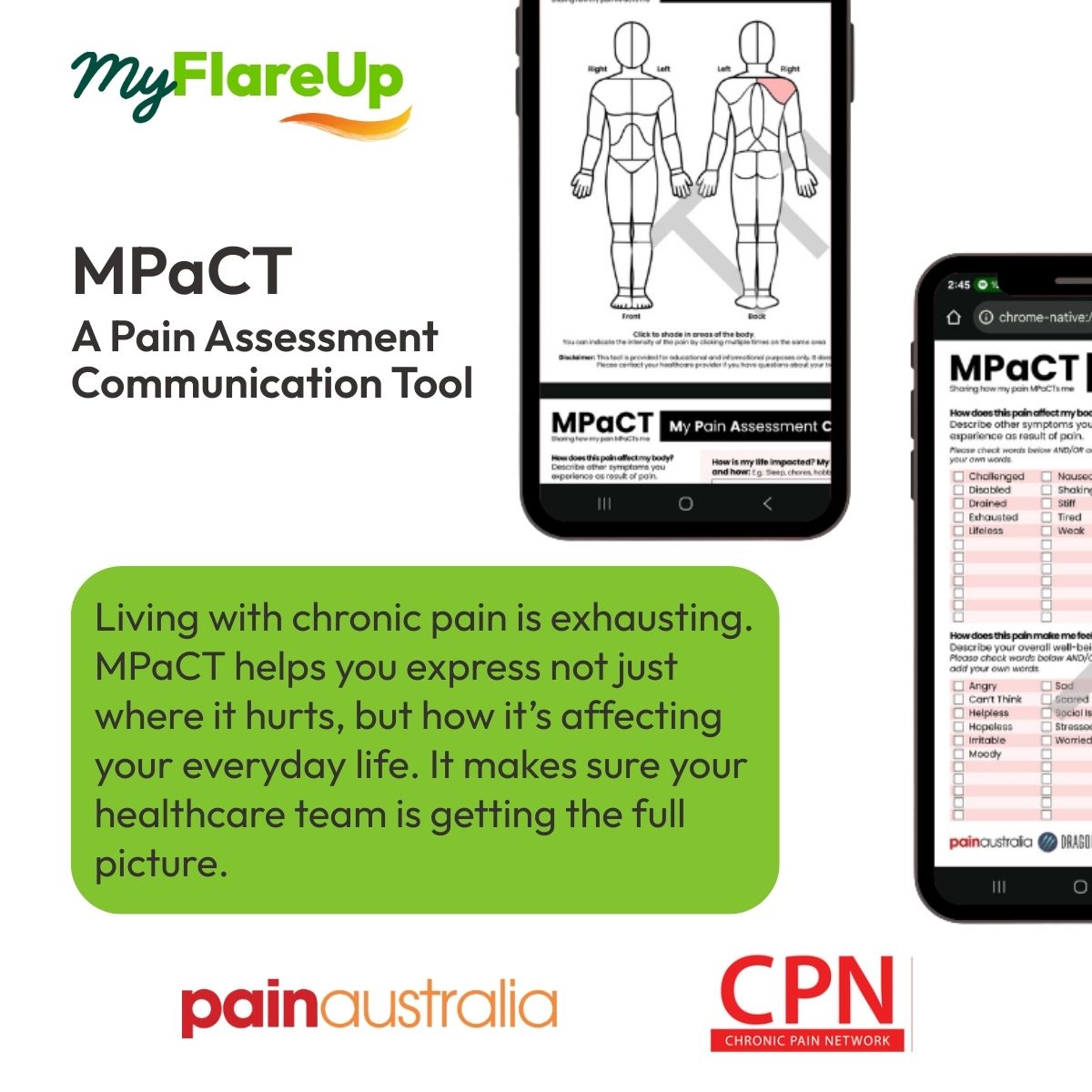
MPaCT
Living with chronic pain is exhausting. MPaCT helps you express not just where it hurts, but how it’s affecting your everyday life. It makes sure your healthcare team is getting the full picture.

